
4 Hyper-Realistic Pizza Image Prompts for a Reusable Campaign
When one good food image is not enough, use four hyper-realistic pizza image prompts to build a cohesive campaign with tactile detail and repeatable direction.
On this page
When one good food image is not enough, use four hyper-realistic pizza image prompts to build a cohesive campaign with tactile detail and repeatable direction.
TL;DR
- Use the four prompts as a connected campaign system, rather than four unrelated food images.
- Keep physical interaction, food texture, environmental light, and the visual direction consistent.
- Change one major variable at a time so you can compare generations honestly.
- Review hands, toppings, cheese, shadows, unwanted objects, and composition before publishing.
Start with a reference, not four unrelated images
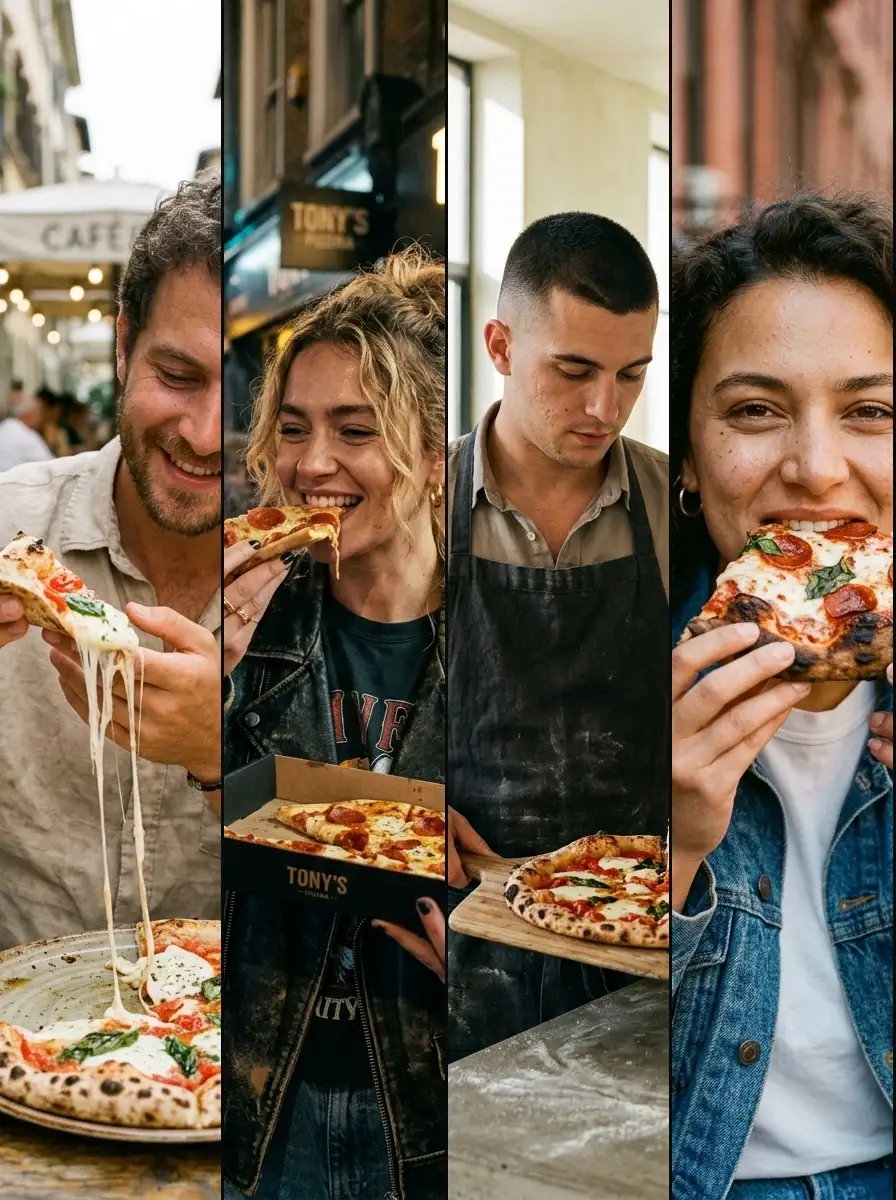
A pizza campaign needs more than four attractive pictures. It needs a visual relationship that survives across scenes, people, locations, and formats. The supplied carousel image is useful because it shows that relationship clearly. People are physically holding or biting pizza, with visible food texture, natural expressions, and a shared documentary feel.
The attached prompt deck sets the campaign in a 3:4 Instagram carousel format at 1024 × 1365, with a 35mm analog realism direction. It also gives each slide a different situation, so the campaign has variety without losing its appetite appeal.
Key Takeaway: Start by defining the shared visual language. The four prompts should feel like four moments from one campaign.
Four prompts for one visual system
Here, hyper-realistic means giving the image model physical relationships and surface cues to work with. Those cues include hands around a slice, cheese stretching from pizza to plate, steam above hot food, oil on a crust, flour in the air, and shadows that match the setting.
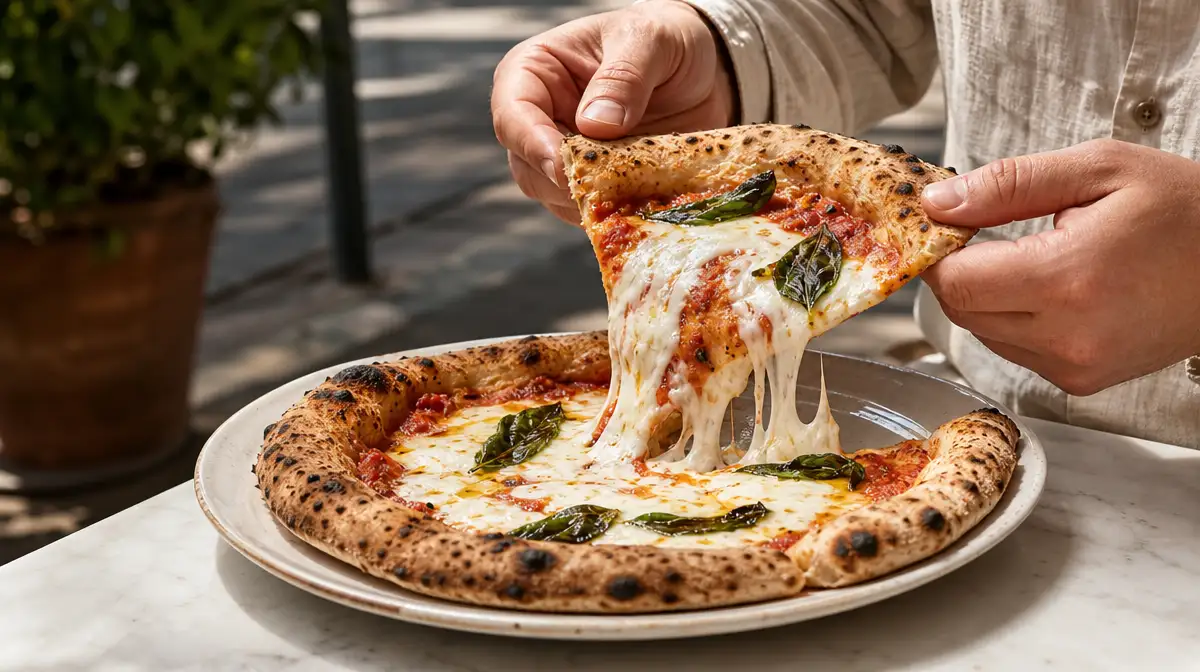
1. Tactile macro: Cheese pull
Hyper-realistic 35mm documentary photography, commercial ad style. A close-up lifestyle shot of a handsome young man in a beige linen shirt at an outdoor sidewalk cafe in summer, lifting an artisan woodfired pizza slice with both hands. Elastic, gooey pull of melted buffalo mozzarella stretching from the plate. Blistered leopard crust, glossy olive oil, fresh basil, visible skin pores on hands. Warm golden-hour sun, f/2.0 shallow depth of field. Analog 35mm feel, zero AI plastic look.2. After dark: Urban rain
Hyper-realistic 35mm film still, cinematic night photography. A stylish young woman with wavy honey-blonde hair in a messy bun, wearing an oversized vintage black leather bomber jacket, standing on a rainy city sidewalk at night outside a glowing neon pizzeria. Holding an open matte-black pizza box, lifting a steaming hot slice with melted cheese, smiling candidly. Delicate rising steam, wet asphalt reflections, warm streetlamp glow, subtle film grain.3. Haute chef’s cut: Editorial
Hyper-realistic medium-format editorial food photography (Kinfolk / Cereal Magazine aesthetic). A stylish artisan pizzaiolo with short dark fade hair in a raw-linen apron in a sun-drenched modern kitchen with textured concrete countertops. Presenting a freshly baked artisan pizza on a rustic wooden peel, holding a warm slice with melted burrata and basil. Morning sunlight streaming in, geometric shadows, airborne flour dust, luxury minimalist art direction.4. Stoop candid: Reference match
Hyper-realistic 35mm street photography for an ad campaign. A close-up portrait of a stylish young woman with curly textured dark hair in a vintage washed-denim jacket, sitting outdoors on sunny Brooklyn brownstone sandstone steps. Holding up a fresh artisan New York-style pizza slice with both hands, taking a bite while looking directly into the camera with an authentic smile. Charred crust, pepperoni, real skin pores, unretouched street portrait.Key Takeaway: The prompts vary the scene and serving moment, while the recurring ingredients are human contact, believable food texture, and a defined photographic point of view.
Keep the visual language consistent while you customize
The four prompts are starting points. Adapt them to a real pizza brand by changing the details that need to match the menu and the campaign, while protecting the details that create continuity.
| Keep fixed across the set | Change deliberately for each variation |
|---|---|
| Physical interaction with the pizza | Pizza style, toppings, and cheese |
| Tactile surface detail such as char, oil, steam, or flour | Person, clothing, and serving moment |
| A clear real-world light source | Location, background, and time of day |
| The chosen photographic direction | Crop, aspect ratio, and placement in the campaign |
Change one major variable at a time. If you replace the pizza, setting, lighting, camera direction, and wardrobe in one pass, you will not know which change improved the result or introduced a problem.
For a delivery campaign, keep the food interaction and material detail, then swap the setting for a kitchen counter or an open box at home. For a seasonal menu, change the toppings and environmental cues while keeping the same visual direction. If a logo, offer, or line of copy must appear in the image, treat it as a separate design review so you can check legibility deliberately.
Key Takeaway: Consistency comes from repeating the visual rules, not from making every frame identical.
Review each generation before it becomes an ad
A convincing food image can still fail as campaign material if the physical details are wrong. Review the image in passes so you catch structural issues before spending time on captions, layouts, or paid media.
- Hands and contact: Are the hands connected naturally to the arms? Is the slice actually being held, lifted, or bitten?
- Pizza structure: Do the crust, toppings, cheese, plate, peel, and box have believable shapes and positions?
- Texture: Do charred edges, melted cheese, oil, steam, flour, and skin look varied rather than plastic or repeated?
- Light and shadow: Do reflections, shadows, and highlights agree with the stated setting?
- Unwanted objects: Look for extra fingers, duplicated toppings, warped boxes, stray utensils, and accidental text.
- Composition: Is the food easy to see? Is there enough clean space if the image will receive a headline or offer in the design stage?
Key Takeaway: Treat the first generation as a reviewable draft. Fix the physical relationship first, then refine texture and polish.
A simple reuse workflow
- Generate the four scenes with the same core visual direction.
- Choose one strong result from each scene and record what worked, including the setting, light, wardrobe, toppings, and crop.
- Adapt the winning variables into a second campaign set, changing one major element at a time.
- Turn the approved images into the carousel, social posts, blog visuals, or paid creative your campaign needs.
The same thinking applies beyond pizza. A prompt becomes more useful when its fixed creative rules, editable variables, and review criteria are clear. BrightBean is designed around that kind of shared marketing context, carrying brand information through ideation, content creation, publishing, and performance-informed improvement while people stay in control of approval and direction.
The result is a small visual system you can reuse, rather than four attractive images that have nowhere to go next.
Sources
- The AI Video Prompt Behind BrightBean’s Paint Reveal Post: https://brightbean.xyz/blog/reusable-ai-video-prompt-paint-reveal/. Reference article showing how to turn a finished AI visual into a reusable prompt by separating fixed creative rules from editable variables.
- BrightBean Instagram post: Creativity has a continuity problem: https://www.instagram.com/p/Dc24ijujk-d/. BrightBean post about creating varied content while keeping a recognizable brand voice and visual continuity.